For helpers · a lost child, a confused adult
You noticed. That is already the most important part.
A child alone and crying in a crowd. An older man who can’t remember where he was going. Most people hesitate because they don’t want to interfere. Here is what to do, step by step, based on advice from child-safety and dementia organisations.
Make a free ID for someone you love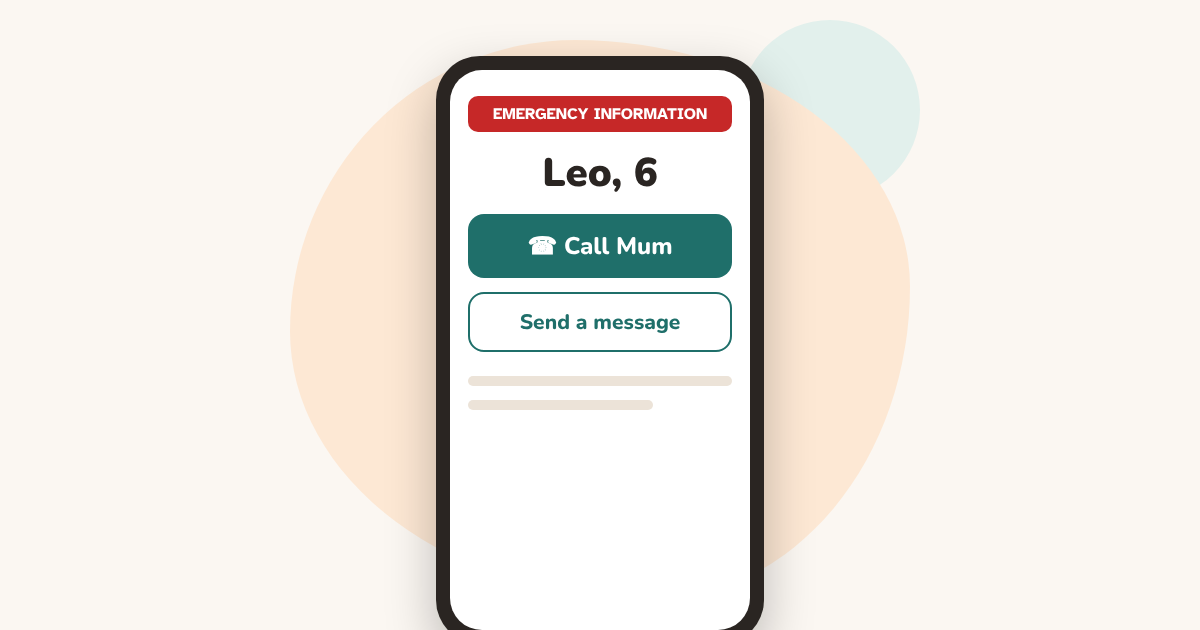
If it’s a child
- Don’t assume someone else will help: go over and ask if they are lost or know where their grown-up is.
- Comfort them with a calm voice, without touching them.
- Don’t ask for lots of personal details: children are taught not to give them to strangers.
- Contact the police, or the staff or security if you are in a shop, park or event.
- Ask another adult nearby to help alert someone in charge.
- Stay where you are. Don’t take the child anywhere else, and don’t drive them to find help.
- Wait with them until help arrives.
If it’s an adult who seems confused
- Approach at a comfortable distance: close enough to hear each other, without crowding them.
- Keep your body language relaxed and open.
- Speak calmly and slowly, in short sentences, one question at a time. If they don’t understand, say it differently rather than repeating it.
- If a police officer or security staff is nearby, tell them. Otherwise contact the police as soon as you can to say you have found someone who may be vulnerable.
- Stay with them if you can, somewhere public like a café or shop, and reassure them as often as they need that they are safe.
Look for a bracelet, a tag or a card
Many families give a child, or a parent living with dementia, a bracelet, a tag on a shoe or bag, or a card in a pocket. If you see a QR code, scan it with your phone camera: no app is needed. A DigitalBracelet card shows who to call with one tap and how to help, in your language, and lets you send the family a message, with your location only if you choose to add it.
Call emergency services straight away if
- They are hurt, unwell, very cold, or in danger, for example near a road or water.
- A child matches a missing-child alert or appeal.
- You can’t stay with them.
- Emergency numbers: 112 in Europe, 911 in the US and Canada, 999 in the UK.
If it’s someone you love who is missing
Start looking straight away, and nearby first: the Alzheimer’s Association notes that many people with dementia who wander are found within 1.5 miles (about 2.5 km) of where they disappeared. If they aren’t found within 15 minutes, call the emergency number, say they have dementia, and have a recent photo ready.
Questions
Should I take a lost child to the police station or to their home?
No. Stay where you found them and wait with them: that is where their family will come back to look, and it keeps you and the child safe.
Is it all right to call the police about a confused adult?
Yes. Dementia organisations advise contacting the police to say you have found someone who may be vulnerable. You are not reporting a crime, you are asking for help.
What if they wear a bracelet with a QR code?
Open your phone camera and point it at the code. No app is needed. The card shows who to call and what to do.
How can I make sure someone could help my own child or parent?
Give them an emergency ID they wear or carry: a bracelet, a shoe tag or a card. You can make a free one here in a few minutes, with nothing stored online.

Create your free emergency ID. Takes 3 minutes. No account. Free forever.
Make a free ID for someone you loveRelated pages
More practical guides
Sources
Published 17 October 2026